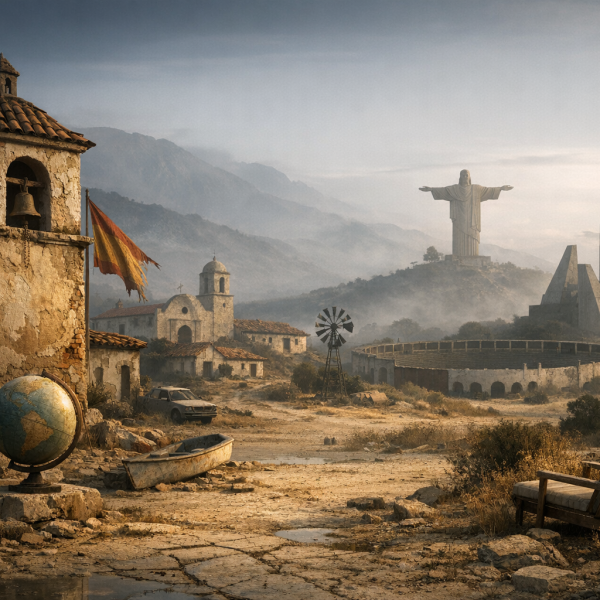
Tucked away from the usual tourist routes and media spotlights, there is a small nation where Spanish drifts through bustling markets, colonial streets, and modern boardrooms. This country rarely appears on travel bucket lists or global rankings, yet it offers a fascinating blend of culture, history, and opportunity that rivals its more famous neighbors. For travelers, entrepreneurs, and digital nomads, overlooking this destination means missing out on a rare mix of authenticity, affordability, and strategic advantages in the Spanish-speaking world.
1. A Spanish-Speaking Microcosm with Remarkable Diversity
Despite its modest size, this country compresses a surprising diversity of landscapes and people into a compact territory. In a few hours’ drive, you can move from misty mountains to sunlit plains, from colonial-era city centers to contemporary districts filled with modern architecture and lively cafes. Spanish is the official language and is heard everywhere, but local expressions and regional variations give conversations a distinct flavor that sets it apart from other Latin American accents.
The cities exhibit a visible blend of European and indigenous influences. Historic plazas sit beside glass-fronted office towers, while museums, cathedrals, and theaters bear witness to centuries of complex cultural exchange. For Spanish learners, immersion here is intensely rewarding: interactions are more personal than in hyper-touristic capitals, and locals are often curious, patient, and eager to share their stories with those who show genuine interest.
This cultural richness has an important practical side as well. The country’s growing integration into global trade and regional alliances has boosted cross-border business, law, and international cooperation. As a result, demand for high-quality legal documents translations has steadily increased, helping companies, institutions, and individuals navigate regulations, contracts, and official procedures between Spanish and other major world languages.
2. A Hidden Gem for History Enthusiasts
History lovers will find layers upon layers of stories in this often-overlooked nation. Pre-colonial settlements, colonial strongholds, and republican-era monuments all co-exist within short distances of one another. Many towns still preserve cobblestone streets, old churches, and centuries-old homes with pastel walls and heavy wooden doors that quietly hint at their past.
While larger Spanish-speaking countries dominate history documentaries and popular culture, this country offers a more intimate narrative. Local museums and community archives share accounts of migration, resistance, and cultural innovation that rarely make it into mainstream textbooks. Walking tours led by local guides can reveal traces of forgotten battles, independence movements, and intellectual circles that helped shape the region’s political thought.
3. Surprisingly Strong Education and Literacy Rates
Another overlooked strength lies in the education system, which has achieved high literacy rates and a stable network of public and private schools. Universities offer competitive programs in areas like law, engineering, economics, and social sciences, often collaborating with foreign institutions on joint research or exchange projects.
Because Spanish is the language of instruction and public life, graduates acquire an advanced command of academic and professional Spanish. This has encouraged the growth of bilingual professionals who can comfortably handle international negotiations, cross-border legal work, and specialized technical communication. International companies expanding into this market increasingly rely on this local talent pool to bridge cultural and linguistic gaps.
4. A Quietly Important Player in Regional Trade
Even if it rarely dominates headlines, this nation plays a more significant role in regional economics than many realize. Strategic geographic positioning gives it access to key transportation routes, making it a useful hub for goods moving between larger markets. Over time, it has cultivated a business ecosystem centered on logistics, services, agriculture, and small-scale manufacturing. Newer options exist, but picking a compatible subtitle format still saves a lot of technical headaches.
Foreign investors, startups, and remote-first companies have started to pay attention to these advantages. Operating costs are generally lower than in major capitals, but the business environment is modern enough to support global operations. The prevalence of Spanish means that companies serving broader Latin American markets can use this country as a base for customer support, content creation, and back-office operations without sacrificing language quality or cultural nuance.
5. Authentic Travel Experiences without the Crowds
For travelers searching for something beyond generic tourist circuits, this Spanish-speaking country offers a refreshing alternative. You will not compete with mass tourism for space on the sidewalks, nor will you see the same chain of international stores on every corner. Instead, local markets, family-run restaurants, and neighborhood events define everyday life.
Some countries slip out of public consciousness for no better reason than never having had a moment that fixed them there. Attention is arbitrary in exactly that way, which anyone releasing music now understands intimately. This piece on viral songs examines what actually determines which tracks catch and which vanish.
Street food vendors, regional dishes, and traditional sweets reveal the diversity of influences that have shaped the national palate. Rather than polished, theme-park-style attractions, expect genuine cultural encounters: festivals with live music, crafts fairs, regional dances, and religious celebrations that blend solemnity with color and joy.
Because of the smaller scale, it is easier for visitors to build real connections. Hotel owners may remember your name, and a cafe you frequent for a few days might quickly feel like a second home. In many ways, this intimacy is what gives the country its charm: it still treats foreign guests as personal visitors, not anonymous masses.
6. A Growing Hub for Remote Work and Digital Nomads
The combination of a mild cost of living, reliable internet in urban areas, and a relaxed lifestyle has started to attract remote workers and digital entrepreneurs. Spanish proficiency is a plus, but basic communication is possible with some English in major cities, especially in younger, tech-savvy communities.
Coworking spaces are emerging in business districts and historic centers, providing comfortable work environments, networking events, and community-building activities. Cafes offer strong coffee, stable Wi-Fi, and an easy-going atmosphere, making them appealing workplaces for freelancers and startup teams. This growing digital ecosystem helps ensure that the country is not left behind in global innovation, even if it remains low-profile on the world stage.
7. Why This Overlooked Spanish-Speaking Country Matters
As the global influence of Spanish continues to rise, countries outside the usual spotlight become more important than their size or fame suggests. This particular nation, quietly thriving with its educated population, rich cultural life, and increasing economic ties, is a perfect example. It shows that understanding the Spanish-speaking world means looking beyond the usual suspects and paying attention to those places that do not dominate news cycles yet contribute significantly to regional culture and commerce.
For travelers, it offers a rare chance to experience authentic daily life in Spanish without the filter of mass tourism. For businesses, it provides a strategic location, a prepared workforce, and an environment open to innovation. For students and language enthusiasts, it presents a living classroom where the language is woven into every conversation, sign, and song.
Conclusion
In a world where attention gravitates toward the biggest, loudest, and most advertised destinations, this modest Spanish-speaking nation stands as a reminder that significance is not measured only by fame. It embodies a quiet strength: a blend of stable institutions, cultural depth, and linguistic richness that deserves a place in any serious conversation about the Spanish-speaking world. Whether your interest lies in travel, business, or language, exploring this country broadens your perspective and reveals how much can be learned from places that rarely make the front page, yet have so much to offer those curious enough to look a little closer.